WAKE-UP CALL FOR FANS OF PUNJABI CINEMA
What if I told you that one of the most hyped Pakistan–India Punjabi film collaborations of 2025, starring our very own Imran Ashraf, just suffered a blow days before its global release? Not because of bad acting. Not because of poor editing. But because of something far more familiar… a last-minute political and cultural cut that reminds us all how fragile cross-border art still is.
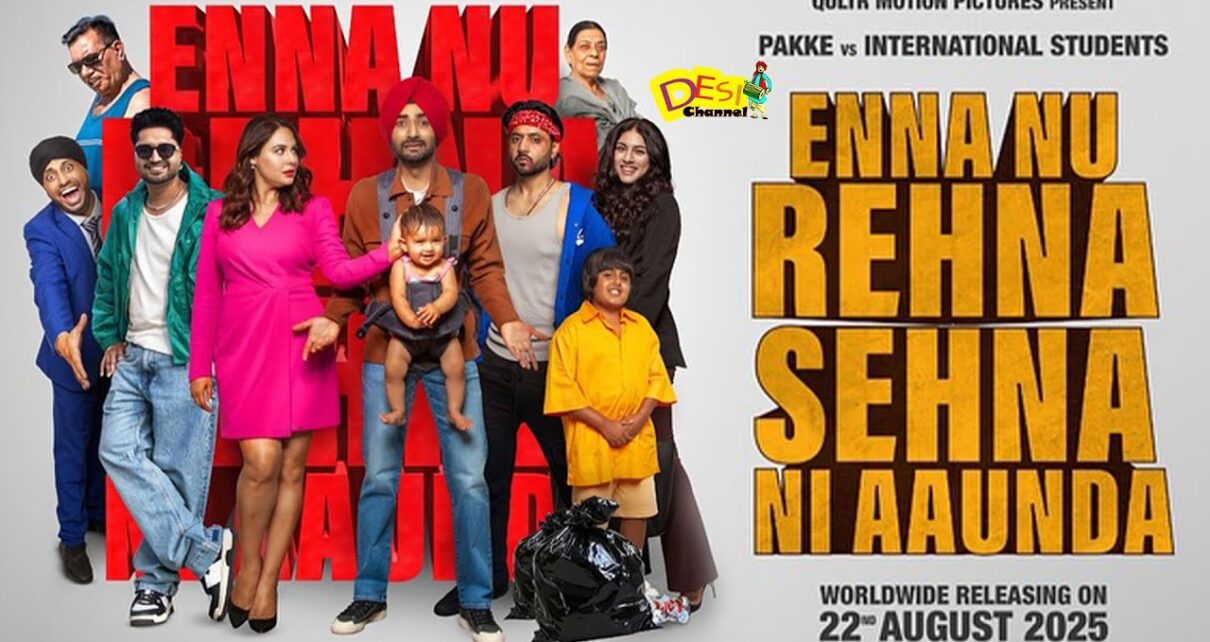
The film is Enna Nu Rehna Sehna Ni Aaunda (ENRSNA). The voice missing? None other than Karan Aujla, a global Punjabi music icon. His song, once promoted as a highlight, is now erased. And if you think this is just “industry business,” think again, it’s part of a long, ugly pattern where our talent gets sidelined, silenced, and sent home empty-handed.
This isn’t just about a song. It’s about respect. It’s about dignity. And it’s about time we face the truth: without mutual respect, every “historic” collaboration is one controversy away from collapse.
A Project That Promised More Than Just a Film
For months, ENRSNA was building anticipation. The buzz wasn’t just about its storyline or star cast it was about what the film represented. This was not just another movie release; it was a rare Pakistan–India collaborative project in Punjabi cinema, carrying hopes of creative unity beyond borders.
At the heart of it was Imran Ashraf, one of Pakistan’s most loved and versatile actors, making his much-awaited Punjabi cinema debut. Paired with an ambitious production and supported by an international music presence, ENRSNA was designed for a global release aiming to appeal to Punjabi audiences across Pakistan, India, Canada, the UK, and beyond.
But just days before its release, controversy struck. A song by Karan Aujla, one of the most popular Punjabi singers worldwide, and backed by Indian music label Speed Records, was removed from the film.
Why This Matters More Than Just a Song
Karan Aujla’s involvement was a selling point for ENRSNA. His voice carries a massive fanbase, cutting across political borders. His music is known to dominate Punjabi charts worldwide. To remove such a song from a major film — especially right before release , sends a strong message, whether intended or not.
It signals that artistic collaboration remains fragile in the face of political sensitivities, industry pressure, and public sentiment. The fact that the decision came so late in the process makes it even more impactful, almost like a public statement that cross-border unity in entertainment is still a risky bet.
A Familiar Pattern in Cross-Border Entertainment
For anyone who has followed cultural exchanges between Pakistan and India, this is not new territory. There have been multiple instances where artistic collaborations have collapsed due to political backlash or public outrage.
During the release of Sardar Ji and several other Punjabi and Bollywood projects in the past, Pakistani artists found themselves edited out, muted, or replaced. Actors, singers, and musicians from Pakistan have often been warmly welcomed in initial stages, only to be sidelined later due to nationalistic pressures or changing political winds.
In many cases, the projects themselves suffered because the artistry was compromised. Fans, too, lost out on the experience they were promised.
The Problem with “Paper-Only” Agreements
When a Pakistani actor like Imran Ashraf steps into an Indian-backed production, there are huge expectations. These projects are often celebrated as signs of cultural diplomacy, where art transcends politics.
But as history shows, signing the paperwork is only half the story. The real challenge begins in navigating the ground realities political climates, media narratives, and public sentiment in both countries.
It’s one thing to sign contracts and promote unity in press conferences. It’s another to withstand the pressure when nationalist voices call for boycotts, edits, or removals.
And in almost every case, the artists are the ones left carrying the burden facing disappointment, public criticism, and sometimes even personal threats.
Why Mutual Respect Is Non-Negotiable
Art and culture thrive on mutual respect. When one side is constantly made to feel like a guest who can be shown the door at any moment, the foundation becomes shaky.
Respect isn’t just about polite words , it’s about honoring commitments, valuing talent equally, and standing by creative decisions regardless of political turbulence.
Unfortunately, Pakistani artists have too often found themselves in positions where their contributions are treated as dispensable. Whether it’s removing songs, cutting screen time, or excluding them from promotions, the pattern is consistent.
The Political Backdrop
While the film industry loves to present itself as apolitical, it rarely escapes the political climate of the day.
India and Pakistan have had tense relations for decades, and every time political hostilities flare, the entertainment industry feels the aftershocks. Artists, despite being far from policymaking, become soft targets for symbolic gestures.
For some political groups, removing a Pakistani song or actor becomes a way to signal loyalty to their national cause. For others, boycotting Indian artists in Pakistan serves as a retaliatory move.
The truth is, art becomes a casualty in a war it never signed up for.
Why This Hits Harder in Punjabi Cinema
Punjabi culture , music, poetry, language , naturally connects people across both sides of the border. The shared heritage runs deep, and the diaspora worldwide consumes Punjabi content without worrying about whether it’s from Lahore or Amritsar.
That’s why collaborations like ENRSNA feel especially meaningful. They remind audiences of the common threads that unite Punjabis everywhere.
But when such projects face disruptions, it’s not just a business loss it feels like an emotional betrayal to those who believe in the unifying power of art.
The Cost for the Artists
For Imran Ashraf, ENRSNA is supposed to be a milestone his first big step into Punjabi cinema. Preparing for such a role involves months of dedication, script reading, character development, and promotion.
To have a major element like a high-profile song pulled out so close to release doesn’t just affect the marketing it impacts the entire energy around the film.
The same goes for Karan Aujla. Whether or not he supported the decision, his work is now absent from a project where it was meant to shine. His fans are left wondering why politics and industry decisions keep interfering with art.
Lessons for the Future
The takeaway here is simple yet vital:
Before entering cross-border projects, both sides must evaluate the ground relations.
That means asking:
-
Is the political climate stable enough to withstand collaboration?
-
Are there clear commitments on creative freedom?
-
What’s the contingency plan if public or political backlash arises?
Without these considerations, projects will continue to face last-minute disruptions and the trust between the industries will keep eroding.
A Call for Dignity in Collaboration
Pakistan’s creative talent is world-class. From music and television to film and theatre, our artists have proven their worth globally.
Collaborations with India can be powerful cultural statements , but only when dignity is preserved on both sides. That means no last-minute removals, no selective edits, and no token inclusion for the sake of headlines.
If respect is mutual, both industries can thrive together. If not, these collaborations will remain fragile showpieces, breaking apart under the slightest pressure.
ENRSNA’s controversy is not just about one song being removed. It’s about a deeper pattern that continues to plague Pakistan–India artistic ventures.
It’s about reminding ourselves that talent deserves respect, not conditional approval. It’s about realizing that while politics may divide, art has the potential to heal but only if it’s allowed to stand firm against the winds of nationalism.
For now, fans will still look forward to seeing Imran Ashraf on the big screen in his Punjabi debut. But the bitter taste of this last-minute cut will remain, not just for this film, but as a warning for future collaborations.
Art can build bridges, but those bridges must be built on solid foundations or they will collapse, song by song, scene by scene.
About Post Author